
Tracking
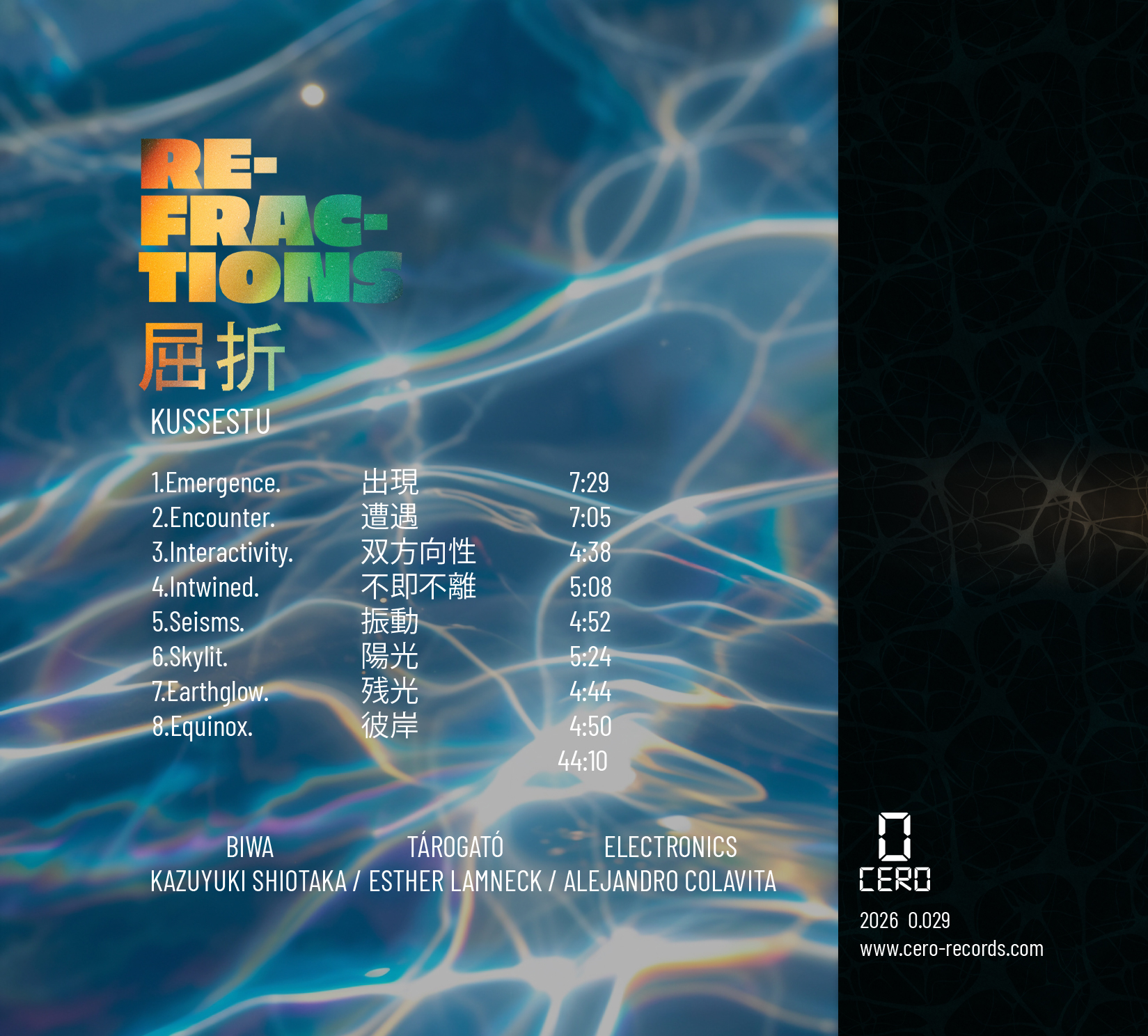
1.Emergence.出現 7:29
2.Encounter. 遭遇 7:05
3.Interactivity. 双方向性 4:38
4.Intwined. 不即不離 5:08
5.Seisms. 振動 4:52
6.Skylit. 陽光 5:24
7.Earthglow. 残光 4:44
8.Equinox. 彼岸 4:50
Músicos
KAZUYUKI SHIOTAKA / ESTHER LAMNECK / ALEJANDRO COLAVITA
BIWA TÁROGATÓ ELECTRONICS
Créditos
Grabaciones, Kazuyuki Shiotaka (Japón), Esther Lamneck (Estados Unidos)
Edición, Alejandro Colavita (México)
Máster, IMCOMUSIC
Diseño gráfico, Juan Pablo Betancourt
Producción, Alejandro Colavita
2026. 0.029
www.cero-records.com
Libro

Disponible por

Video
Kazuyuki Shiotaka / Esther Lamneck / Alejandro Colavita – REFRACTIONS 屈折 KUSSESTU
REFRACTIONS. KUSSESTU. 屈折 is our new album for BIWA, TÁROGATÓ and ELECTRONICS. The album is a sonic exploration of the original folk instruments, the Japanese Biwa and the Eastern European Tárogató.
Working with electronic scores created by Alejandro Colavita the artists have used threads of traditional sounds of the Biwa and Tárogató interwoven with avant-garde gestures and colors.
I have played the Tárogató for decades in improvised music settings.
There are few compositions notated for the instrument. Gustav Mahler required the Tárogató for the performances at Vienna and Budapest of the Shepherd Boy’s tune in the third act of Wagner’s “Tristan and Isolde”. There are beautiful tapes and recordings of traditional Tárogató performers available. Among the Hungarian folk instruments which I find most interesting is the ütőgardon (gardon). It is considered a stringed percussion instrument in the shape of a cello but played by hitting the strings with a wooden stick while simultaneously plucking and pulling a string to create a percussive, rhythmic sound.
I have always been interested in exploring the traditional instruments of the countries I travel to for performances. Having been invited to perform in Japan, I looked into traditional Japanese instruments including the Biwa. The Biwa is primarily a plucked stringed instrument (a Japanese short-necked lute) rather than a dedicated percussion instrument. It is played with a large plectrum that can produce percussive sounds rather than a bow as with the Hungarian ütőgardon. Besides Takemitsu’s signature composition, “November Steps”, I have not heard many composed works by classical composers for the Biwa. The traditional performances of the instrument have intrigued me.
When I expressed my interest in meeting a Biwa player, one of my colleagues and artistic director of the “7artscafe” in Yokohama, arranged for me to meet and play with Kazuyuki Shiotaka. Our informal recording session for Biwa and Tárogató and the opportunity to play with him piqued my interest in pursuing a further collaboration.
It has been my pleasure to collaborate with sound designer Alejandro Colavita in the realization of numerous recording projects. He shares my Interest in unique sounds and possibilities and proposed that we pursue creating an album for Biwa, Tárogató and electronics. The process has been interesting since Alejandro is in Mexico City, Kazuyuki resides in Tokyo and I live in New York. The sound tracks were recorded in various orders giving each of us equal opportunities to contribute to the creation of this collaborative project. This interactive way of working has allowed us to produce an album which provides different sonic perspectives and added interest to these extraordinary instruments.
Esther Lamneck

